12 Easy English Novels for Beginners
A difficulty-rated list of 12 English novels for beginners, all under 300 pages. Organized into three levels from super easy to stepping up, with specific tips for B1-B2 ESL learners.

If your English is at B1 or B2 level and you have never finished a full novel, this list is for you. Every book here is under 300 pages, uses vocabulary you can actually handle, and has a plot strong enough to pull you forward even when you hit a word you do not know. We rated each one for difficulty so you can pick the right starting point instead of guessing and giving up on page 40.
Think of reading english novels for beginners like learning to swim: you do not start in the deep end. You start where the water is shallow, get comfortable, and move gradually toward deeper books. The 12 novels below are organized into three levels, from super easy to stepping up, so you can build confidence in stages rather than drowning in vocabulary you have never seen.
What Makes a Novel Beginner-Friendly?

A beginner-friendly novel is not just “easy.” It meets four specific criteria that matter for non-native speakers: short length (under 300 pages), plain prose with everyday vocabulary, a plot that keeps you turning pages, and sentence structures that are not tangled with clauses inside clauses. When a book hits all four, you finish it. When it misses even one, you stall.
Page count matters more than people admit. At B1 level, you read roughly 150 to 200 words per minute in English, compared to 250 or more for native speakers. A 300-page novel that takes a native reader 6 hours will take you 10 to 12. That is still doable. A 600-page novel becomes a multi-month project, and that is where most learners quit. Short books let you finish fast enough to feel the reward.
Vocabulary is the second filter. Contemporary novels written after 1950 tend to use modern, everyday English. Classics from the 1800s often use archaic words and complex sentence patterns that slow you down. That said, some older writers, Hemingway and Orwell in particular, deliberately wrote in plain style, and their books are actually easier for ESL readers than many modern ones. We called this out book by book below.
If you want a broader perspective on where these books sit in the larger landscape of English literature, our ranked list of the 25 best English novels ever written covers the full range from beginner-friendly to challenging. This post pulls out the ones that work specifically for non-native speakers and rates them by difficulty.
12 Easy English Novels for Beginners
Here is the full list at a glance. Each book gets a detailed breakdown below, grouped into three difficulty levels. Page counts vary by edition; we used the most common paperback editions as reference.
| Title | Author | Pages | Difficulty | Best For |
|---|---|---|---|---|
| The Old Man and the Sea | Hemingway | 127 | ★ | Simplest sentences in English fiction |
| Of Mice and Men | Steinbeck | 107 | ★ | Dialogue-heavy, emotional plot |
| Animal Farm | Orwell | 112 | ★ | Political fable, very plain prose |
| The Giver | Lowry | 179 | ★ | Young adult, clean vocabulary |
| The House on Mango Street | Cisneros | 110 | ★★ | Vignettes, poetic but simple |
| The Great Gatsby | Fitzgerald | 180 | ★★ | Short classic with vivid imagery |
| The Curious Incident of the Dog | Haddon | 226 | ★★ | Short chapters, unique narrator |
| The Outsiders | Hinton | 192 | ★★ | Fast plot, teen vocabulary |
| Holes | Sachar | 233 | ★★★ | Two timelines, straightforward prose |
| The Catcher in the Rye | Salinger | 234 | ★★★ | Conversational voice, slang |
| The Alchemist | Coelho | 163 | ★★★ | Translated English, philosophical |
| To Kill a Mockingbird | Lee | 281 | ★★★ | Richer vocabulary, powerful story |
Level 1: Super Easy (Basic English)
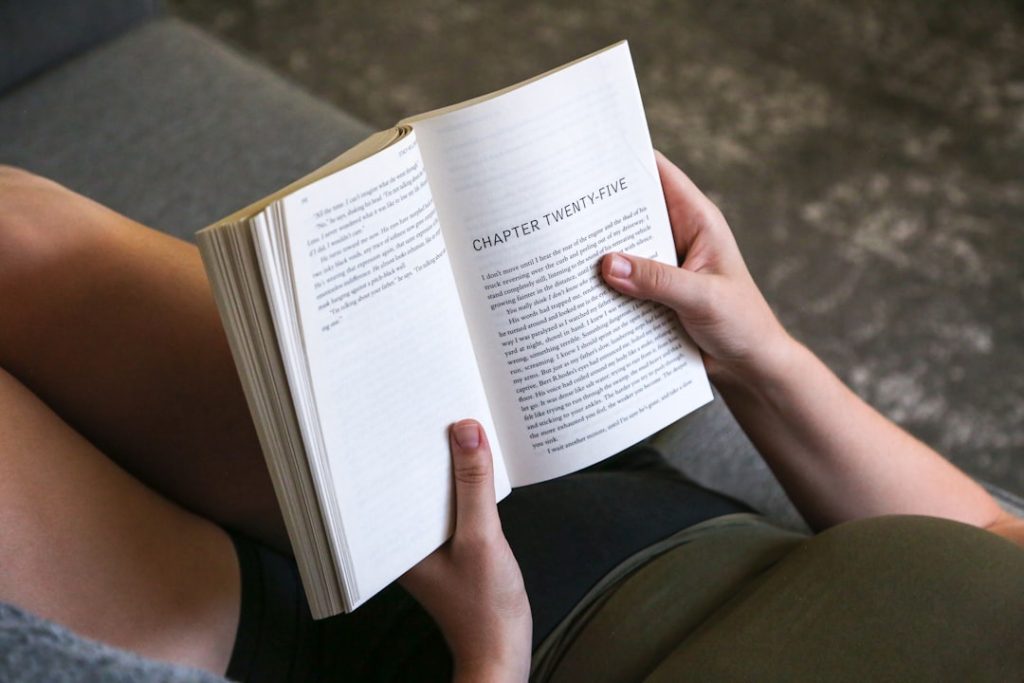
These four novels use the simplest sentence structures in English fiction. If you are at B1 level and have never finished a novel in English, start here. You should be able to read each one in a week or less.
1. The Old Man and the Sea (Ernest Hemingway, 127 pages, ★)
Hemingway famously wrote in short, direct sentences, and this novella is the purest expression of that style. An old fisherman battles a giant marlin alone at sea for days. The vocabulary is basic, the sentences are short, and the emotional weight comes from what happens, not from fancy language. If you want proof that simple English can carry a great story, this is the book.
2. Of Mice and Men (John Steinbeck, 107 pages, ★)
Two migrant workers in Depression-era California dream of owning a small farm, and the story moves toward a ending you will not forget. Steinbeck wrote almost entirely in dialogue and plain description, which makes it ideal for ESL readers. The slang and workers’ speech might slow you in the first chapter, but the patterns repeat and you adjust fast.
Correction: The book is 107 pages and the prose stays simple throughout. The emotional payoff is enormous for such a short read.
3. Animal Farm (George Orwell, 112 pages, ★)
Farm animals rebel against their human owner and set up their own government, which slowly turns into a dictatorship. Orwell believed political writing should be clear, and his prose here is some of the most transparent in English literature. The animal fable format means the story is easy to follow even if you miss some cultural references. A perfect first novel for B1 readers.
4. The Giver (Lois Lowry, 179 pages, ★)
In a society where pain and choice have been eliminated, a 12-year-old boy is selected to receive all the memories the community has suppressed. Lowry wrote this for young adults, which means the vocabulary is clean, the sentences are short, and the chapters end on hooks that pull you forward. The dystopian premise raises questions that are easy to discuss, making it a good choice if you want to practice talking about what you read.
Level 2: Easy (Intermediate English)
5. The House on Mango Street (Sandra Cisneros, 110 pages, ★★)
A young Latina girl grows up in a Chicago neighborhood, told through 44 short vignettes, some only a paragraph long. Cisneros writes in present tense with simple, poetic language that is easy to parse but still carries emotional depth. Because each section is so short, you can read one or two in a coffee break and feel a sense of progress. The fragmented structure also means if you do not understand one section, the next one starts fresh.
6. The Great Gatsby (F. Scott Fitzgerald, 180 pages, ★★)
The shortest great American novel, and one of the most efficient. A mysterious millionaire pursues a married woman in 1920s New York, narrated by an outsider watching it all fall apart. Fitzgerald’s prose is more decorative than Hemingway’s, with occasional metaphors that might send you to a dictionary, but the plot moves quickly and the chapters are short. Some 1920s vocabulary (flapper, bootlegger) is easy to guess from context.
7. The Curious Incident of the Dog in the Night-Time (Mark Haddon, 226 pages, ★★)
A 15-year-old boy on the autism spectrum investigates the death of a neighbor’s dog and uncovers a family secret. The narrator takes things literally, which means the prose is unusually clear and direct. Short chapters (some are just two pages) make it easy to set reading goals. The unique narration also teaches you how English can sound when someone avoids figurative language, which is useful for B2 learners.
8. The Outsiders (S.E. Hinton, 192 pages, ★★)
Rival teen groups clash in 1960s Oklahoma, and a boy caught in the middle tries to make sense of loyalty, violence, and identity. Hinton wrote this when she was 16, and the prose has the urgency of someone writing for peers, not professors. The slang takes a few pages to adjust to, but the plot moves fast and the emotional stakes are high. Good for B2 readers who want something with momentum.
Level 3: Stepping Up (Upper-Intermediate)
These four books bridge the gap between easy reads and full literary fiction. They are still under 300 pages, but the vocabulary is richer, the themes are more complex, and some use narrative techniques (slang, multiple timelines, symbolic language) that require a bit more effort. Finish a couple from Level 1 and 2 first, then move here.
9. Holes (Louis Sachar, 233 pages, ★★★)
A boy is sent to a detention camp where inmates dig holes every day in a dried-up lake, and the story weaves together two timelines that eventually connect. The prose is straightforward, but the dual-narrative structure asks you to hold information from the past timeline while reading the present one. That makes it a good bridge book: the language is easy, but the reading comprehension required is a step up.
10. The Catcher in the Rye (J.D. Salinger, 234 pages, ★★★)
A teenager wanders New York City for three days after being expelled from school, narrating everything in his own voice. That voice is the whole point: Holden speaks the way a real person talks, with digressions, repetitions, and slang. For ESL readers, this is both the challenge and the benefit. You will learn spoken-style English, informal idioms, and the difference between written and conversational prose. The vocabulary is everyday; the challenge is the voice.
11. The Alchemist (Paulo Coelho, 163 pages, ★★★)
A shepherd boy travels from Spain to Egypt following a dream about hidden treasure. Coelho originally wrote in Portuguese, and the English translation is deliberately simple and fable-like, with short sentences and straightforward vocabulary. What makes this Level 3 rather than Level 1 is the philosophical layer: the book talks about destiny, omens, and personal legends in abstract terms that require interpretation. The prose is easy; the ideas ask you to think.
12. To Kill a Mockingbird (Harper Lee, 281 pages, ★★★)
A lawyer defends a Black man falsely accused of a crime in 1930s Alabama, seen through the eyes of his young daughter. Lee’s prose is accessible, but she uses Southern dialect, period-specific vocabulary, and shifts between a child’s perspective and adult themes. This is the longest book on the list and the most demanding, but the story is powerful enough to carry you through the difficult passages. A great final book to prove you can read a real novel in English.
Tips for Reading Your First English Novel
Finishing your first English novel is less about vocabulary size and more about reading strategy. The biggest mistake ESL learners make is stopping at every unknown word, looking it up, and losing the thread of the story. Here is how to avoid that trap.
Do Not Stop for Every Word
If you understand the general meaning of a sentence, keep reading. Most unknown words become clear from context within a few pages, and the ones that do not are usually not essential to the plot. Set a rule: you only look up a word if it appears three or more times and you still cannot guess it. This keeps you in the story instead of turning your reading session into a dictionary exercise.
Use Context Clues First
Before reaching for a dictionary, ask yourself: what is happening in the scene? What would make sense here? English fiction gives you enormous amounts of context through action, dialogue, and description. If a character “scowled” and the scene is angry, you can infer the meaning without a dictionary. This skill transfers to every future English text you read.
Keep a Small Vocabulary List
Write down five new words per reading session, not fifty. Write the word, the sentence it appeared in, and a short definition in your own words. Reviewing five words is manageable; reviewing fifty is not, and you will abandon the habit within a week. The goal is consistency, not coverage.
Re-Read Chapters If Needed
There is no penalty for going back. If a chapter confused you, re-read it the next day. The second pass is always faster because you already know the shape of the story, and the vocabulary that slowed you down is now familiar. Re-reading also builds the pattern recognition that makes future novels easier. Think of it as training, not repetition.
Match the Book to Your Level
If you start a book and find yourself looking up more than 10 words per page, that book is too hard right now. Put it down and pick something from Level 1. There is no shame in reading a 107-page novella. The confidence you build from finishing it will make the next book easier, and the one after that easier still. Progress in reading is cumulative.
Read Aloud Sometimes
Reading a paragraph aloud helps you hear the rhythm of English sentences, which improves both pronunciation and comprehension. You do not need to read the whole book aloud. Pick one passage per session, especially dialogue, and speak it. This is particularly useful with The Catcher in the Rye and Of Mice and Men, where the spoken voice is central to the book’s style.
Your Next Step in English Reading
Pick one book from this list, the one that sounds most interesting to you, not the one that seems most impressive. Interest beats difficulty every time. A book you genuinely want to finish will carry you through the unfamiliar vocabulary; a book you chose because it looked literary will feel like homework by page 30.
At Urdu Moral Stories, we believe stories are the most natural way to learn a language. Whether it is an English story about curiosity and friendship for children or a classic novel for adult learners, the principle is the same: when you care about what happens next, the language stops being a barrier and starts being a bridge. If you read one of these novels and have a question, a reaction, or a recommendation of your own, tell us. We would love to hear what worked for you.
Frequently Asked Questions
What is the easiest English novel for beginners?
The Old Man and the Sea by Ernest Hemingway is widely considered the easiest. It uses short, direct sentences, basic vocabulary, and is only 127 pages. Animal Farm by George Orwell is equally accessible at 112 pages.
Can I read English novels at B1 level?
Yes. At B1 level you can read novels with simple vocabulary and short sentences. Start with Level 1 books like Of Mice and Men, Animal Farm, or The Old Man and the Sea, which are all under 130 pages and use plain, everyday English.
How many pages should my first English novel be?
Keep it under 300 pages. At B1-B2 level you read slower than native speakers, so a 300-page book may take you 10 to 12 hours. Shorter books let you finish fast enough to feel rewarded and motivated to read the next one.
Should I look up every word I do not know?
No. Stopping at every unknown word kills your momentum and makes reading feel like a dictionary exercise. Only look up a word if it appears three or more times and you still cannot guess it from context. Keep a small list of five new words per session.
Are graded readers better than real novels for ESL learners?
Graded readers are useful for controlled vocabulary practice, but real novels give you authentic English and the satisfaction of finishing an actual book. Once you reach B1, try a real novel from this list. The sense of achievement from finishing a genuine novel is a powerful motivator.